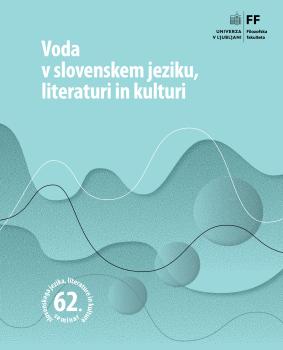
62. seminar slovenskega jezika, literature in kulture: Voda v slovenskem jeziku, literaturi in kulturi
Keywords:
water, Slovenian literature, literary folklore, Christian symbolism, hydrology, elemental philosophy, Slovenian languageSynopsis
Water, especially the sea, lakes, and rivers, plays an important and multifaceted role in language (particularly literature), culture, philosophy, various beliefs, mythologies, and more.
First and foremost, we think of its powerful symbolic value. Water is regarded as both a symbol and a source of life (e.g., in the Bible, where it carries numerous and often ambivalent meanings) and creativity, as well as survival—if one simply recalls the ancient civilizations that settled along great rivers. In mythological stories and religious texts, water can signify creation or divinity, as well as strength, wisdom, or truth; it can be a gift of God for survival. Water or the bodies of water mentioned above are often associated with purification, either physical or spiritual. In various religions (Christianity, Judaism, Hinduism, and Islam), water is used in rituals (e.g., baptism, immersion in the Ganges). Because of its fluid state and adaptability, water also embodies change. It is described as the most perfect companion on a journey because in flowing it also becomes a path itself. Water is a prominent motif and theme in literary works, where it serves as a vivid metaphor. Especially seas or lakes can symbolize the depths of human emotions, states of mind, and moods (from despair and melancholy to serenity and hope). They may also represent great, unfathomable, and dark mysteries. In literature, water can be a setting, it can illustrate the passage of time or life itself, it can serve as a backdrop for the story, or it can even help shape the character of literary figures. Throughout history, the beauty and magnificence of seas, lakes, and rivers have inspired writers and other artists, whose works continue to evoke powerful emotions. The fact that water is a vital element in the human experience, interpretation, and exploration of the world is confirmed by idioms, proverbs, and sayings (referring to water, the sea, lakes, rivers), as well as by the Slovenian folk tradition, which shows that water—home to a variety of mythical beings—has stirred human imagination throughout history.
The importance of water for Slovenia, which ranks among the richest European countries in natural water resources, is further affirmed by Article 70a of the Slovenian Constitution, which guarantees everyone the right to drinking water, and by the Slovenian coat of arms, which features two undulating blue lines representing the sea and rivers.
Chapters
-
Za uvodVoda
-
Morje in kontinentalci
-
Voda v slovenski slovstveni folklori
-
Motiv jezera in vode v poeziji in prozi Luize Crobath Pesjakove
-
Krščanski simbol vode kot navdih slovenskega leposlovja
-
Hidrologija v SlovenijiRazvoj, izzivi in vplivi podnebnih sprememb
-
Z vodo do modrosti preko filozofije in izkustva elementovPrimer solinarstva
-
Voda v slovenski terminologiji, frazeologiji in paremiologiji
-
Poimenovanja za vodo v slovenskih narečjih med neprevzetimin prevzetim besedjem
-
Robbov vodnjakMed barokom in sedanjostjo
-
Voda v Visoški kroniki Ivana Tavčarja
-
Vodni element v Pahorjevem življenju in njegovi prozi
-
»Kako globok je pač ta vodnjak? In bog ve, kaj je vse doli na dnu?«Motiv vode v kratki prozi Zofke Kveder
Downloads
Downloads
Published
Categories
License

This work is licensed under a Creative Commons Attribution-ShareAlike 4.0 International License.